



P. Kolar, M. S. Grbić, S. Hrabar, Sensors 19, 03064 (2019)
M. S. Grbić, JAP 125, 224501 (2019)
T. Cvitanić, M. Lukas, M. S. Grbić, Rev. Sci. Instrum. 90, 043903 (2019)
D. Pelc, P. Popčević, M. Požek, M. Greven, and N. Barišić, Sci. Adv. 5, eaau4538 (2019)
D. Pelc, H.-J. Grafe, G. D. Gu, and M. Požek, Phys. Rev. B 95, 054508 (2017).
R. Blinder et al. Phys. Rev. B 95, 020404(R) (2017).
D. Pelc, M. Vučković, H.-J. Grafe, S.-H. Baek, M. Požek, Nature Communications 7, 12775 (2016).
D. Pelc, M. Požek, V. Despoja and D. K. Sunko, New J. Phys. 17, 083033 (2015).
M. Došlić, D. Pelc and M. Požek, Rev. Sci. Instrum 85, 073905 (2014).
T. Cvitanić, D. Pelc, M. Požek, E. Amit, and A. Keren, Phys. Rev. B 90, 054508 (2014).
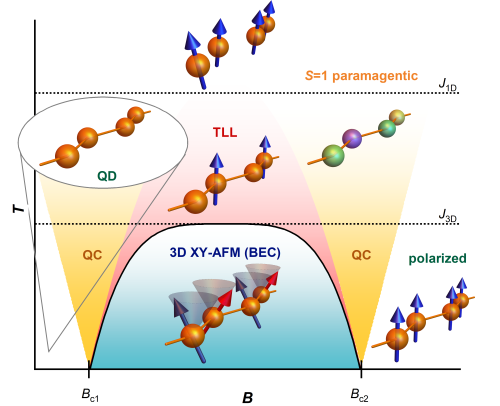
I. Jakovac and M. Grbić, together with collaborators from Japan, France and Germany, have succeeded to confirm theoretical predictions for the behavior of S=1 Haldane chain system in high magnetic field. These researchers have previously shown that the compound m-NO2PhBNO (abbreviation BoNO) is an ideal Haldane chain system, and this has now been confirmed by additional research. For the S=1 Haldane chain, it was predicted back in 2002 and 2003 that in a high magnetic field at temperatures lower than the intrachain interaction strength J1D, quasiparticles with attractive interactions appear (the so-called Tomonaga-Luttinger liquid (TLL)). At low temperatures, a magnetic Bose-Einstein condensate (BEC) of excitations (triplons) appears. The magnetic field plays the role of a chemical potential and, as it increases, creates more and more BEC bosons. The evolution of the TLL and BEC phases stops when the field reaches the value Bc2 = 4J1D + 8J3D when the quantum critical point (QCP) is reached and the entire system becomes polarized.
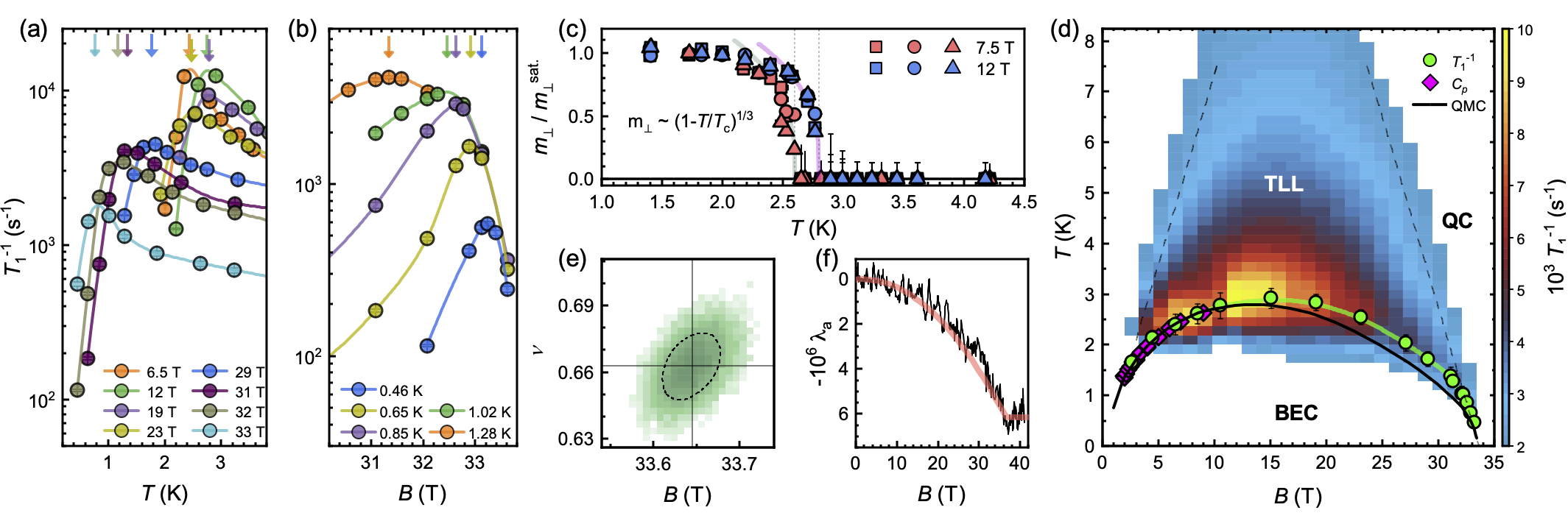
This discovery is particularly important because researchers have been creating new compounds of the Haldane system for decades in the attempt to demonstrate this behavior, and about 20 different compounds have been synthesized to date. All of them were based on transition metals and all of them have specific limitations related to anisotropy, which is why the predictions could not be confirmed. In contrast, BoNO was synthesized using a completely different approach - it is a fully organic compound without transition metal ions, which is why the anisotropy is extremely small. This is evidenced by the fact that the value of the electron g factor (2.0056 ± 0.0009) is extremely close to the free electron value (2.0023).
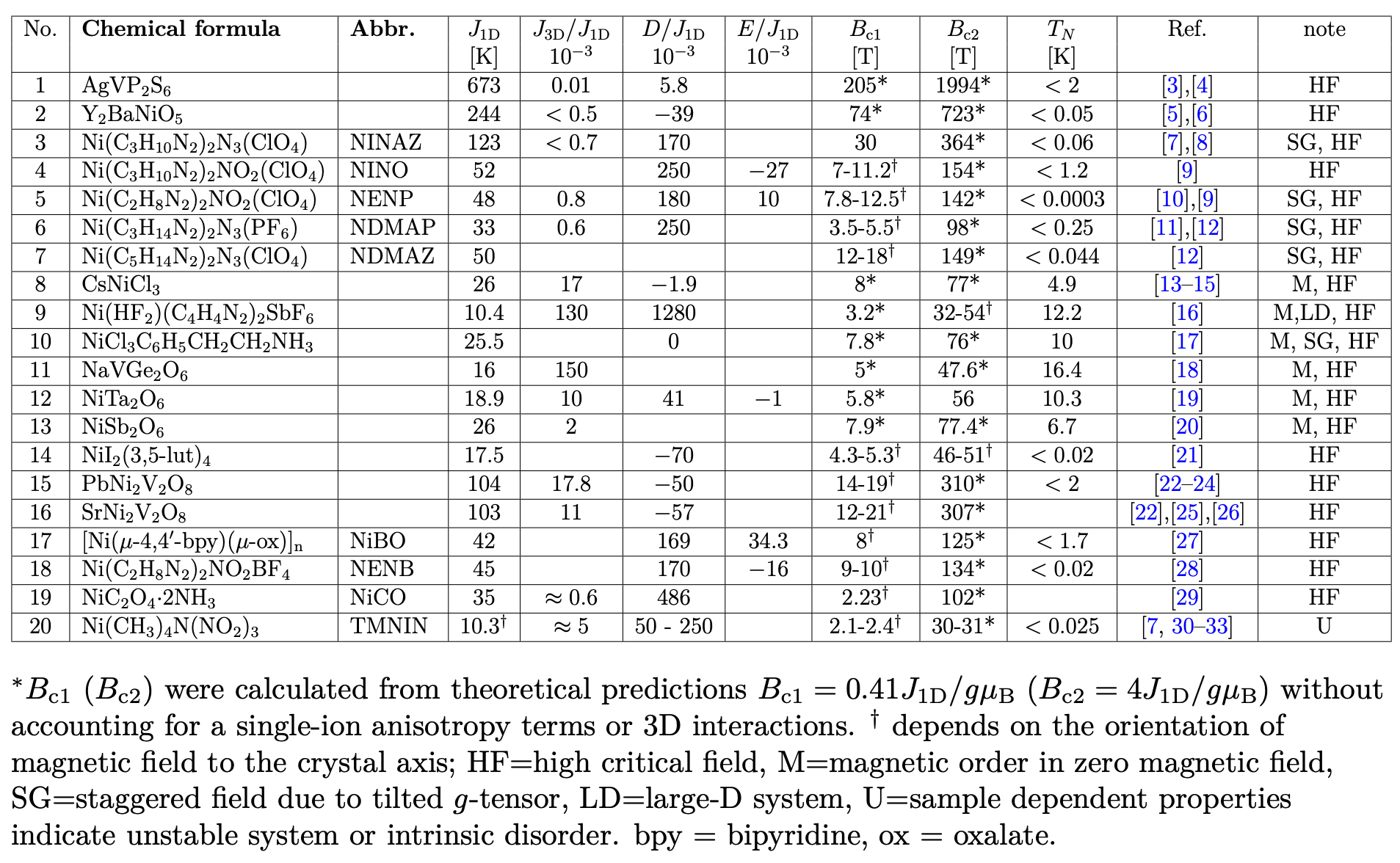
Paper has been accepted for publication in Physical Review Letters.

|
M. Grbić, I. Jakovac and I. Kupčić discovered that in Cs2Cu3SnF12 compund (with a kagome crystal lattice) at temperatures above 20 K, below which the system transitions to an antiferromagnetic state, freely traveling magnetic defects, so-called vortices and antivortices, appear. These topological structures in two dimensions were first predicted in 1973 by V. Berezinskii, J. M. Kosterlitz and D. J. Thouless (BKT). This is the first time that BKT correlations have been found in a compound with a frustrated kagome lattice. So far, only a few cases have been recorded in spin systems, and of those in only one frustrated system (with a triangular lattice). While in all previous systems BKT correlations are typically localized within a narrow temperature range above the magnetic transition, in this compound they exist in a wide temperature range (more than 100 K). Interestingly, the BKT correlations appear together with the onset of short-range chiral order previously detected by neutron scattering. |
The system was studied using nuclear magnetic and quadrupolar resonance techniques and all measurements were done at the Department of Physics of the Faculty of Science. The results clearly show the onset and evolution of short-range order, and the paper also revises the magnetic structure that forms below 20 K.
The paper has been accepted for publication in Physical Review Letters.
 In the journal Physical Review B, a new compound belonging to the class S=1 of the Haldane chain was presented. The article is the result of a long-term cooperation of the NMR group with partners from Japan, Slovenia and France. The research was led by I. Jakovac, T. Cvitanić and M.S Grbić, with the support of colleagues from the Department of Chemistry: N. Baus Topić and D. Cinčić.
The paper presents the properties of a completely organic S=1 antiferromagnetic (AF) chain m-NO2PhBNO (abbreviation BoNO). In this biradical system, the two unpaired electrons from the aminoxyl groups are strongly ferromagnetically bound (|JFM|/kB ≈ 500 K), which leads to the creation of an effective S = 1 state for each BoNO molecule. The chains of BoNO biradicals extend along the crystallographic a axis. The temperature dependences of the g factor and electron paramagnetic resonance (EPR) linewidth are consistent with a low-dimensional system with AF interactions. EPR data further suggest that BoNO is a Haldane system with a nearly isotropic g factor (2.0023 ± 2‰). Magnetization measurements in magnetic fields up to 40 T and susceptibility in low field, together with 1H nuclear magnetic resonance (NMR) spectra, reveal dominant intrachain AF coupling of J1D/kB = (11.3 ± 0.1) K, and achievable critical magnetic fields of μ0Hc1 ≈ 2 T and μ0Hc2 ≈ 33 T. Our measurements therefore suggest that BoNO is a rare example of a Haldane system with extremely small magnetic anisotropy. The present results are crucial for future in-depth NMR studies of the low-temperature Tomonaga-Luttinger liquid phase and magnetic field-induced phases, which can be carried out in the entire phase space.

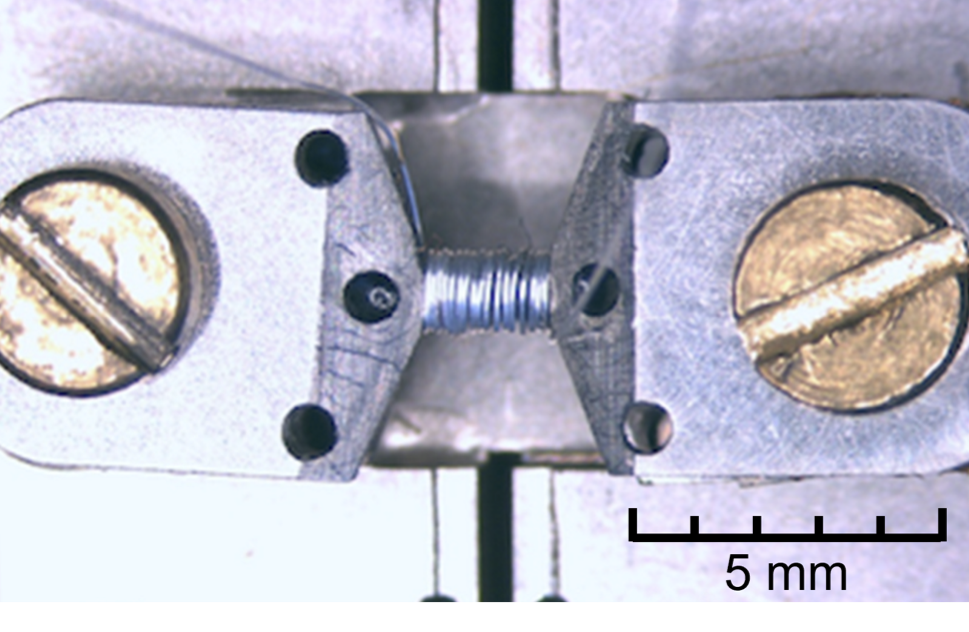 |
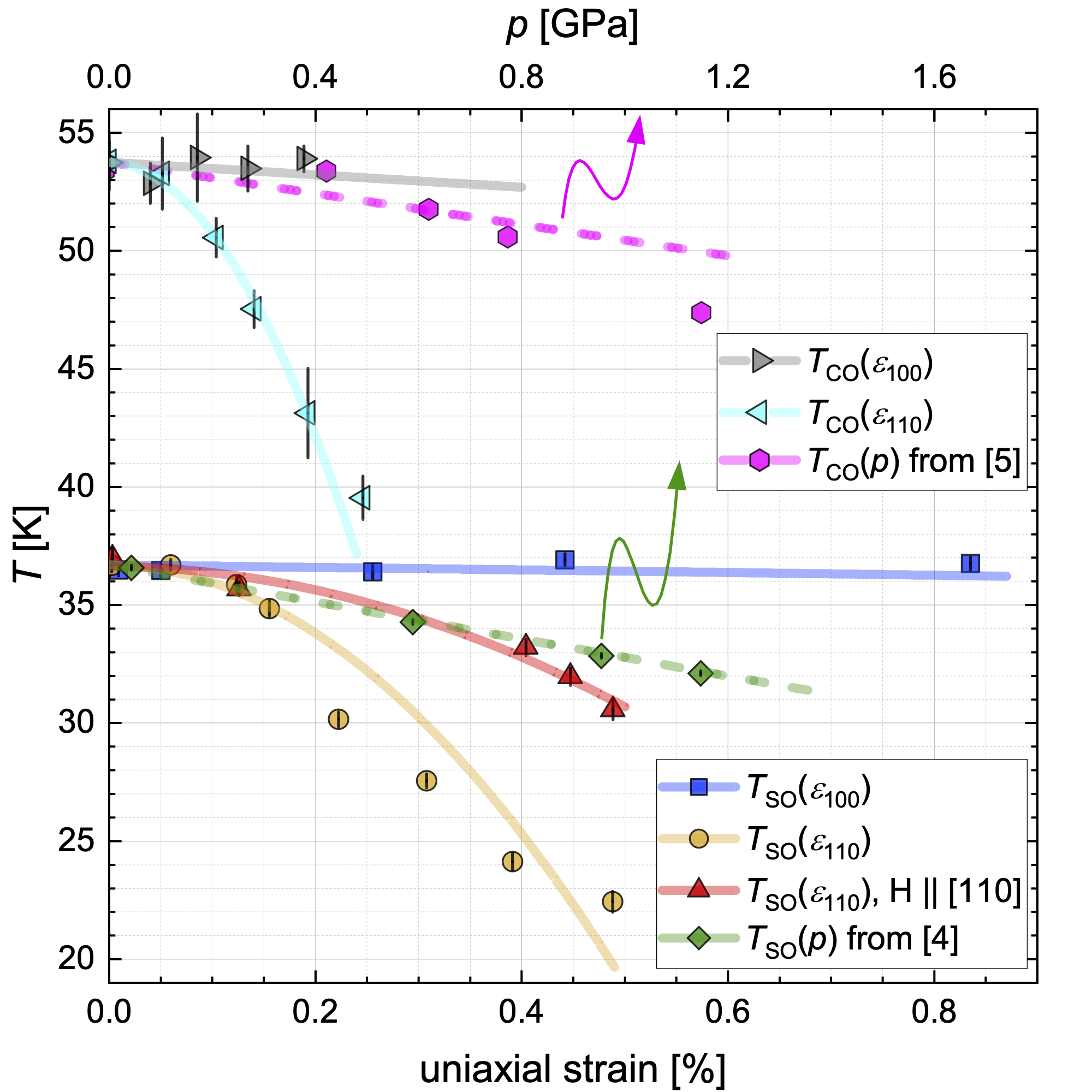
I. Jakovac, M. Požek and M.S. Grbić published a paper in Physical Review B where uniaxial stress was used to control the transition temperatures of the charge and spin "stripe phase" in the compound La1.875Ba0.125CuO4. The study was made using 139La NMR and 63Cu NQR. While in the unstrained state, a low-temperature tetragonal structure is formed below TLTT = 57 K, and the charge and spin transitions are at, respectively, TCO = 54 K and TSO = 37 K. We found that straining along the [110] crystallographic direction greatly suppresses TCO and TSO, although the TLTT is only slightly altered. In other words, straining along [110] causes a large divergence (≈ 21 K) between TCO and TLTT, indicating that these transitions are not strongly coupled. On the other hand, strain along [100] causes a (slight) suppression of the TLTT and has no effect on TCO and TSO. The magnetic field along [110] stabilizes the spin order: the suppression of the TSO by strain along [110] is weaker with the field along [110] than along [001]. |
To better understand these results, a Landau free energy model was developed, and we find that our results can be interpreted as the interplay of symmetry-breaking terms in the spin orientation.
Comparing our results with previous measurements under hydrostatic pressure p shows that the suppression of TCO and TSO can be fully explained by the effect of strain on the CuO2 planes.
The paper is available at the following link.
The research was carried out with the support of the Croatian Science Foundation (project IP-2018-01-2970), the Alexander von Humboldt Foundation (project 3.4-1022249-HRV-IP), the CeNIKS project co-financed by the Croatian Government and the European Regional Development Fund, Operational Programme Competitiveness and Cohesion (project KK.01.1.1.02.0013).
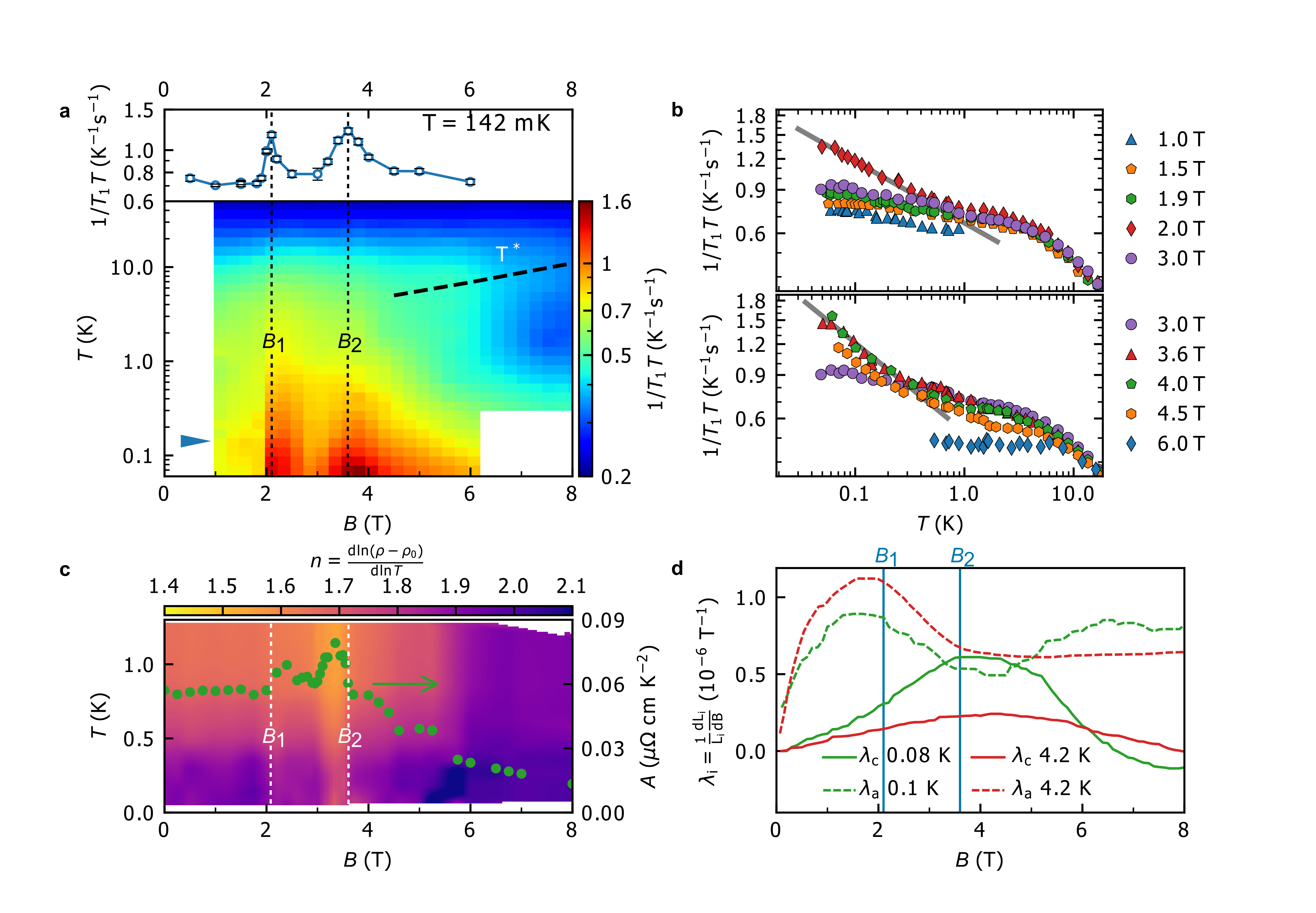
The journal Nature Communications has published an unexpected discovery of quantum criticality in the intermediate valence compound α-YbAlB4, caused by anisotropic hybridization. The authors of the paper are researchers from Japan, Germany and the USA, and among the main authors is a member of our NMR group M. S. Grbić.
In α-YbAlB4, the Yb ions have an intermediate valence of +2.75. Compounds from the so-called intermediate valence class are usually characterized by behavior typical of metals; e.g. isotropicity, a decrease in resistance with cooling, and high stability when a magnetic field or pressure is applied. This stability is typically provided by the conduction electrons within the compound, as they are the ones that try to screen the intermediate valence of Yb that occurs at relatively high orbital hybridization energies (in this compound, this is at T0 ≈ 200 K). Therefore, it was expected that it would be difficult to achieve any new properties under standard laboratory conditions.
However, the properties of the α-YbAlB4 compound change when a small magnetic field (less than 5 T) is applied. Using a number of techniques, this work shows how conduction electrons hybridize with the ytterbium f-orbital in a very anisotropic manner, leaving "blind spots" where the hybridization is not present at all. Such a complex situation in α-YbAlB4 enables the phenomenon of quantum criticality to occur, where electrons, due to the action of quantum fluctuations, begin to "forget" their properties.
This discovery is new as it was previously thought that compounds with intermediate valences were uninteresting in modern science, while on the other hand, the phenomenon of quantum criticality has been one of the most interesting topics in science for the past 25 years.
You can read the full article at the link: https://www.nature.com/articles/s41467-022-29757-9
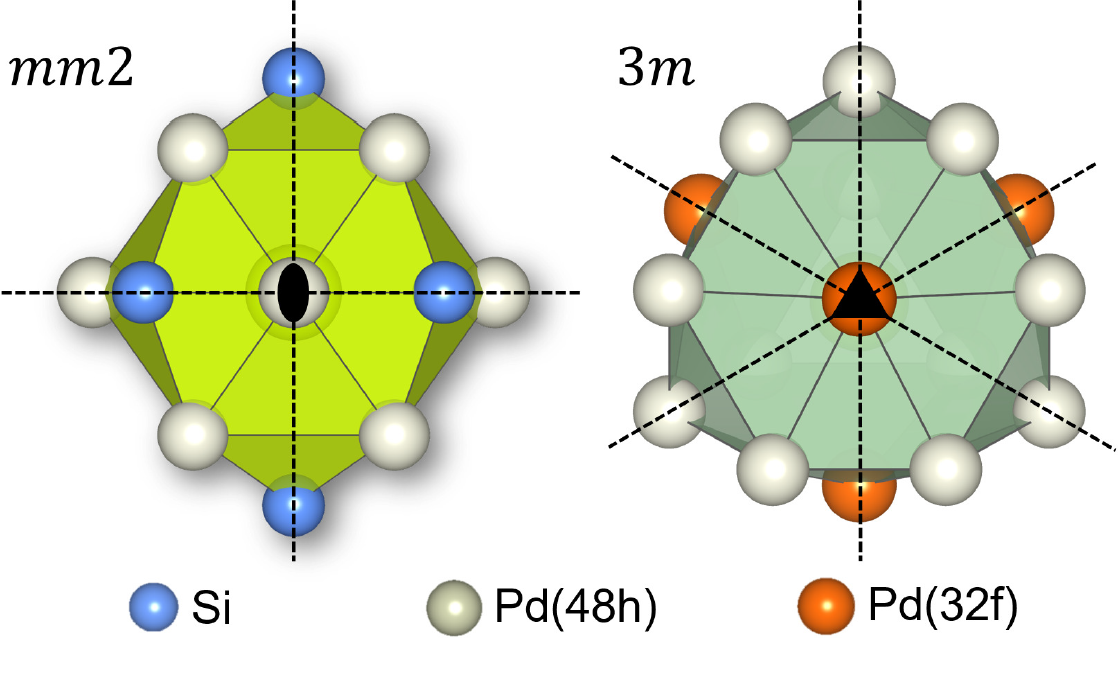 Within the scope of his doctoral research, member of the NMR group Ivan Jakovac published a research paper on a heavy fermion compound Ce3Pd20Si6 (abbreviated CPS) in the journal J. Phys.:Cond. Mat. 32, 245601 (2020). CPS is of significant interest for the researhc community since the electrons here acquire larges effective mass due to strong correlations caused by the vicinity of the quantum critical point. Apart from that this is the first compound with two crystallographically inequivalent cerium sites, and two types of correspoding correlations.
NMR and NQR research of the palladium nuclei described in the paper is just an initial description of how the measured signals correspond to particular nuclear transition of a specific Pd site. Its results are crucial for exact description of quantum correlations that present the most interesting part of research on this compound.
The paper is published in an open access format and can be read from the link above.
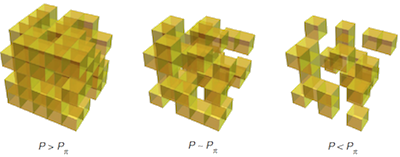
Researchers from the Department of Physics Damjan Pelc, Marija Vučković, Mihael Grbic, Miroslav Požek and Neven Barišić discovered a new property of high-temperature superconductors, showing that the formation of superconductivity in the cupreates can be universally understood through the process of percolation. The discovery was published in Nature Communications in collaboration with colleagues from the US and Japan.

As a result of the collaboration between researchers Damjan Pelc, Miroslav Požek and Neven Barišić from the Department of Physics, with the scientists from the Institute of Physics, the Technical University of Vienna and the University of Minnesota, a paper was published in the prestigious magazine Quantum materials from the Nature journal group, in which superconductivity in dc electrical resistance is explained by a simple model of superconducting percolation.
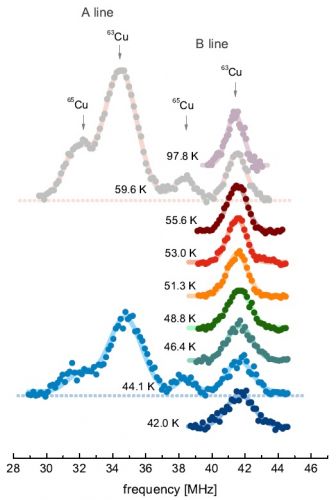
In high-temperature superconductors based on copper and oxygen, electrons conspire to form a rich variety of ordered phases. One of the most important are charge stripes, where the electrons organize into wave-like charge patterns in the material. To study charge stripes, experimental probes such as nuclear magnetic resonance (NMR) are used to provide microscopic information on stripe physics. Yet NMR studies of charge stripes in one of the prominent copper-oxygen compound families - lanthanum-based cuprates - have long been hampered by an effect known as signal wipeout: the NMR signals strongly decrease when charge stripes form. Damjan Pelc and Miroslav Požek in collaborations with colleagues from Dresden and Brookhaven (D. Pelc et al., Phys. Rev. B 95, 054508 (2017)) describe a way to detect the wiped-out signal, resolving the nature of the wipeout after long-running controversies, and enabling new insight into the behavior of charge stripes in cuprates.
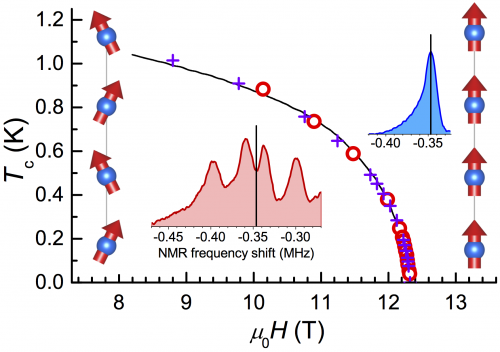
Our team collaborated with the group at LNCMI to inspect the microscopic properties of the magnetic field-induced order in DTN - the archetype compound for BEC systems. The system was studied in the vicinity of the upper critical field (Hc2 = 12.32 T), where by using static NMR data we traced the emergence of boson density upon entering the BEC phase for H < Hc2, and for the first time tested the validity of various theoretical predictions.
The paper has been published in Physical Review B - Rapid Communication, and received the Editors' Suggestion. It can be found at the link http://journals.aps.org/prb/abstract/10.1103/PhysRevB.95.020404
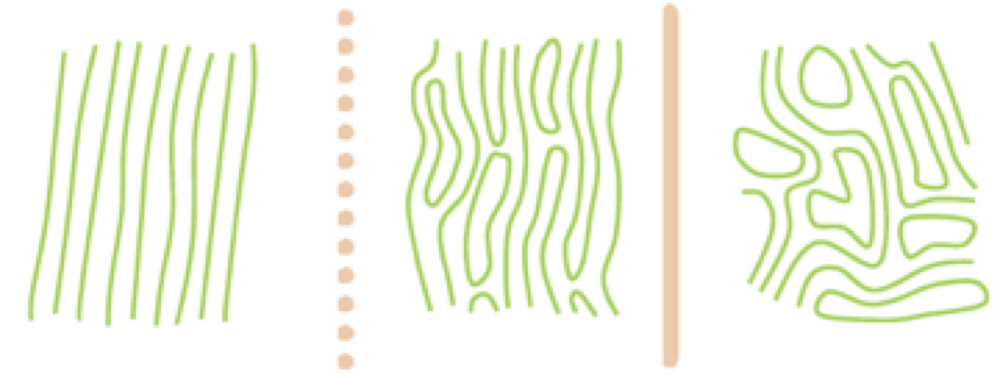
In a paper published today by Nature Communications our team Damjan Pelc, Marija Vučković and Miroslav Požek in collaboration with researchers from Dresden published a discovery of a nematic charge phase between stripe charge order and a metallic state in La1.8-xEu0.2SrxCuO4, thus explaining how the charge stripes melt in cuprates.
This is already a third paper this year published in Nature Communications in which the authors were researchers from the Department of Physics.
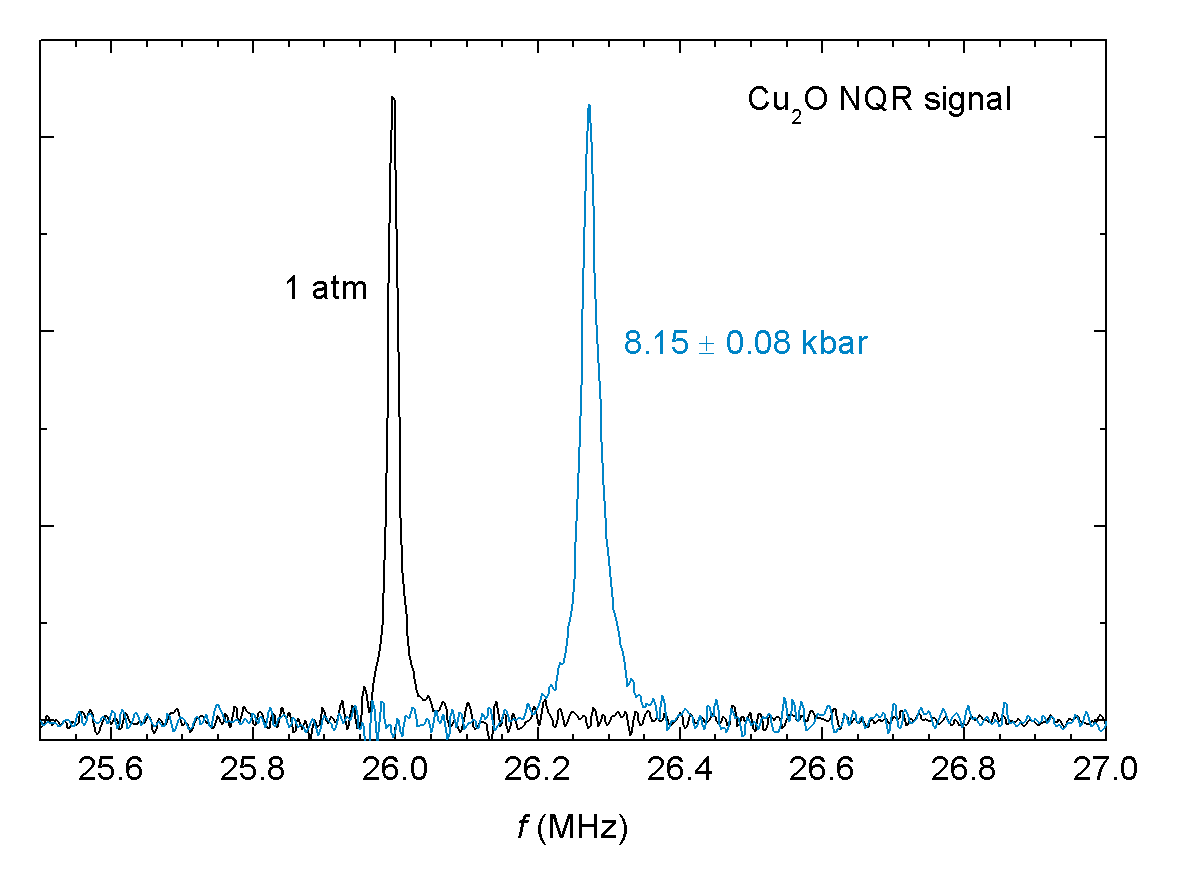
The first ever pressure-dependence study has started at the Department of Physics. One of the goals of the UKF project Quantum CorES was to initiate the pressure research at the faculty, and we are happy to report that the first pressure mounting has been successful.
In the image to the left one can see two signals - an NQR signal of Cu2O powder measured at ambient pressure and at 8.15 kbar. The position of the line moves due to a change in ionic interaction of copper and surrounding oxygen, when the crystal cell is under stress.
Pressure is increased via hydrostatic compression, and the plan is to reach 26 kbar this summer.
To our great joy, the era of pressure research has begun at the Faculty of Science.
We thank our colleague P. Popčević from the Institute of Physics who helped us in preparation of this experiment.
 Pristupačnost